
In Bangkok, your electricity bill depends mostly on air conditioning and on how your building charges for it: at the public utility rate or at a rate set by the building. Ask before signing, along with how water is billed and the internet contract. A few simple habits then keep these bills under control.
Rent is easy to compare from one listing to another. Utility bills much less so. Yet between air conditioning, water and internet, they can make up a significant share of your monthly budget, and above all vary widely from one building to another for the same usage. Here is what to know before signing, and how to keep these costs under control once you have moved in.
1.What is included in the rent, and what isn't?
In most condo rentals in Bangkok, the rent covers the flat and access to the building's facilities (pool, gym, security). Building fees, which pay for the upkeep of the building, are usually paid by the owner.
What you usually pay:
- electricity;
- water;
- internet and your mobile plan;
- sometimes cleaning, parking or an extra access card.
Each lease may say otherwise: some homes, especially serviced apartments, include internet, cleaning or even an electricity allowance. Read the relevant clause and have what is included confirmed.
2.How is electricity billed?
In Bangkok, electricity is supplied by the Metropolitan Electricity Authority, the public utility for the capital and its inner suburbs. The residential tariff works in consumption bands, plus a periodic adjustment and VAT. Current rates are on the utility's official website: mea.or.th.
In a condo, two situations are common:
- An individual meter at the public utility rate: the bill comes in the name of the owner or the unit, and you pay it directly or through the owner. This is usually the cheapest option.
- Billing by the building or the owner: consumption is read on a sub-meter and recharged at a per-unit rate set by the building. This rate can be noticeably higher than the public rate.
This is the most important question to ask before signing: "Is electricity billed at the public utility rate or at a building rate?" For the same usage, the difference over a year can be significant.
3.Why does air conditioning weigh so much on the bill?
Bangkok is hot all year round, and air conditioning often runs for several hours a day, sometimes at night. It is by far the biggest energy use in a flat.
A few habits help keep it in check:
- set the temperature around 25 to 26 °C rather than as low as possible;
- close the doors and curtains of the air-conditioned room;
- use a fan as well, which uses far less power;
- have the filters cleaned regularly: a dirty unit uses more power and cools less. Ask who handles this maintenance, the owner or you;
- during viewings, favour recent "inverter" units.
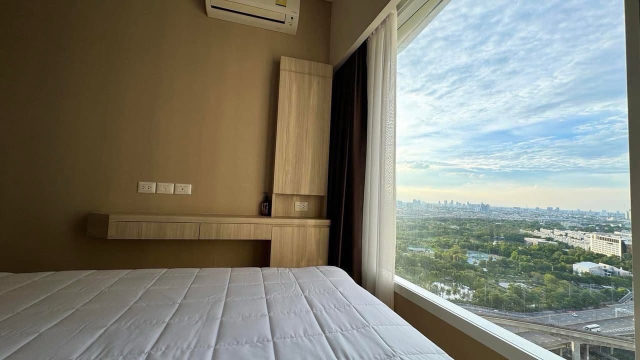
Orientation matters too: a high-floor flat facing west heats up more in the afternoon.
4.Why does the bill change with the seasons?
Bangkok roughly has three seasons: a hot season, often from March to May, a rainy season, then a slightly cooler period at the end of the year. Air conditioning runs most during the hot season, and electricity bills rise. If you compare with a bill provided by the owner, ask which month it is from: a December bill says little about April's.
The banded tariff also plays a role: the higher the month's consumption, the higher the price of the last units used. Cutting air-conditioning hours during the hot months therefore makes a noticeable difference.
5.How is water billed?
Bangkok's tap water is supplied by the Metropolitan Waterworks Authority (mwa.co.th). In condos, water is often read on a meter per unit and recharged by the building, sometimes as a flat fee per person or per month.
The amount is usually modest compared with electricity, but again, ask how it is calculated. For drinking, most residents use bottled water, water dispensers or a filter; many buildings have filtered-water machines in the lobby.
6.Which internet plan should you choose?
Many condos are already wired for fibre. Several providers offer home plans, including AIS, True and 3BB. Offers vary by building: not every building is connected to every provider.
Before signing, ask:
- Is a connection already installed in the unit?
- Whose name is the contract in, and can it be transferred to yours?
- What is the minimum term of a new contract, and what happens if you leave early?
To sign up in your own name, your passport is usually required, sometimes with other documents depending on the provider.
What about your mobile phone?
A Thai SIM card is easy to buy, at a provider's shop or in some stores, on presentation of your passport: registering the card in the user's name is mandatory. Prepaid data plans are simple to start with; a monthly plan can be better value later. A local number is useful for deliveries, ride-hailing apps and some formalities.
7.How do you pay your bills?
Bills can be paid in several ways: through your Thai bank's app, by QR code, online, or at the counter of many convenience stores. If the bills come in the owner's name, agree with them on how to pay and keep every receipt.
Until you have a Thai bank account, some bills can be paid in cash or through the owner. Our guide "Preparing your arrival in Thailand: documents and first days" covers opening an account.
8.What if a bill looks wrong?
A bill that doubles from one month to the next often has a simple explanation: an ageing air conditioner, a dirty filter, a water heater running constantly, or a meter-reading error. Compare the meter reading with the bill, photograph the meter at the start and end of the month, and quickly report the discrepancy to the owner or the building's reception. If an appliance is at fault, repairing it is usually the owner's responsibility, depending on the lease.
9.Other small costs to plan for
- Cleaning, if you hire a housekeeper or use the building's service.
- Parking, sometimes charged separately, especially for a second car.
- Extra access cards, if lost or for a family member.
- Air-conditioning maintenance, if the lease makes it the tenant's responsibility.
- Gas, rarely: most condos have electric or induction hobs.
10.The questions to ask before signing
- Is electricity at the public utility rate or at a building rate?
- Can I see a recent bill?
- How is water billed?
- Is internet installed? In whose name, and with what commitment?
- Who pays for air-conditioning maintenance?
- Are parking, cleaning or access cards charged extra?
Have the answers written into the lease or confirmed in writing. It is one of the points we always check for our clients before signing.
Frequently asked questions
How much does electricity cost per month in a Bangkok condo?
It depends mainly on air conditioning, the size of the unit and how the building bills it. The most reliable approach is to ask for a recent bill for the unit before signing.
Can you drink tap water in Bangkok?
Most residents use bottled water, dispensers or a filter for drinking, partly because the condition of building pipes varies.
Do I need a Thai bank account to pay bills?
Not always: many bills can be paid in cash at convenience-store counters. A Thai account does make payments much easier, though.
Can the internet contract be cancelled mid-lease?
Terms depend on the provider and the minimum term. Check before signing up, especially if your lease is short.
General information updated on 10 October 2026; check your contract and with the Find Easy team.