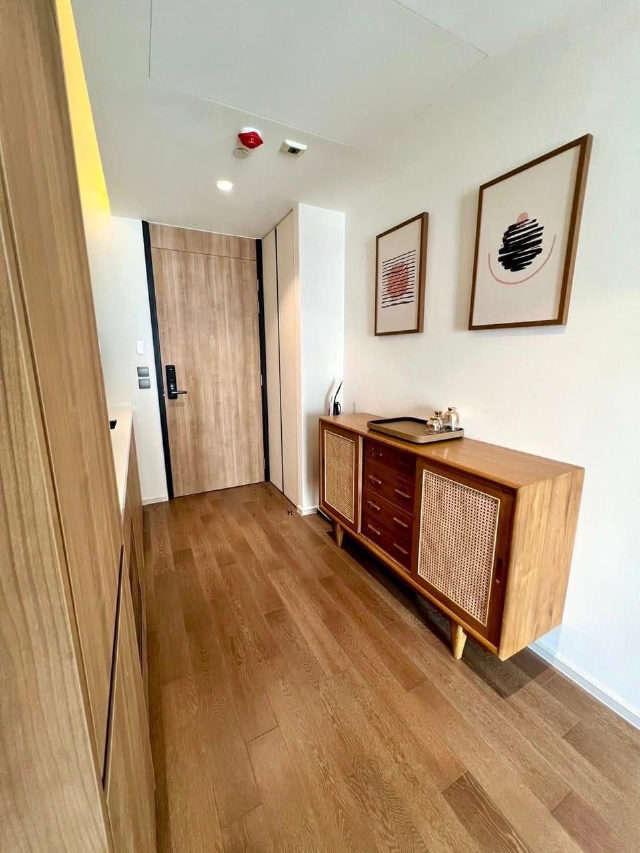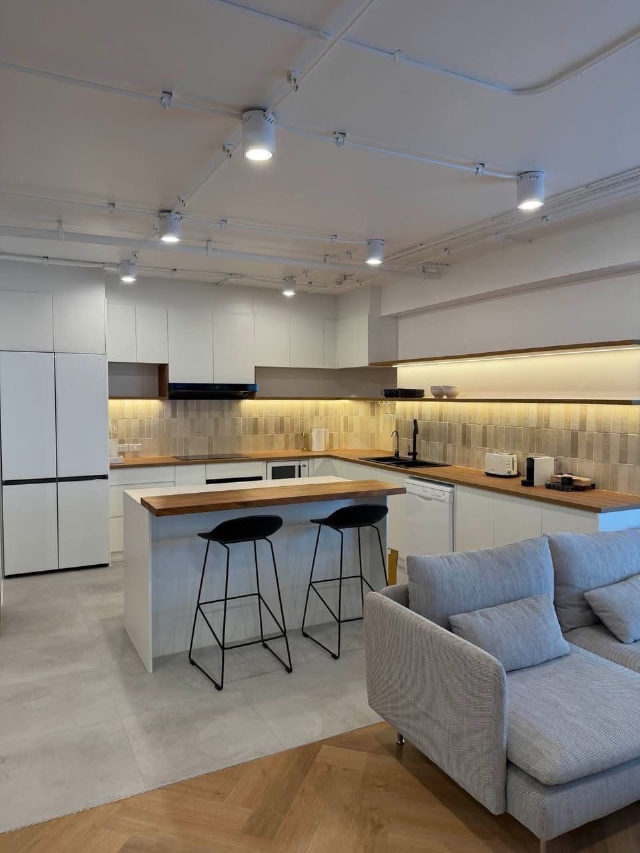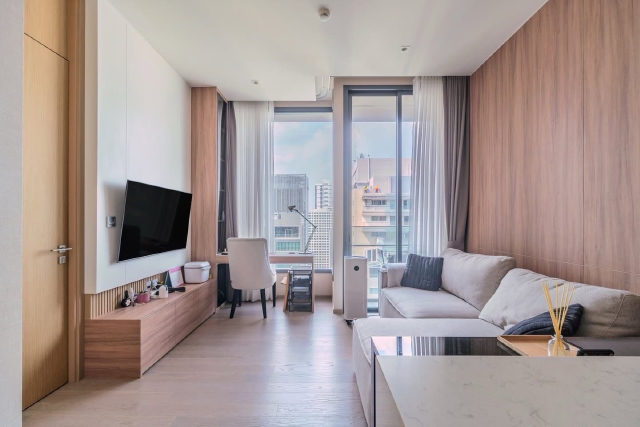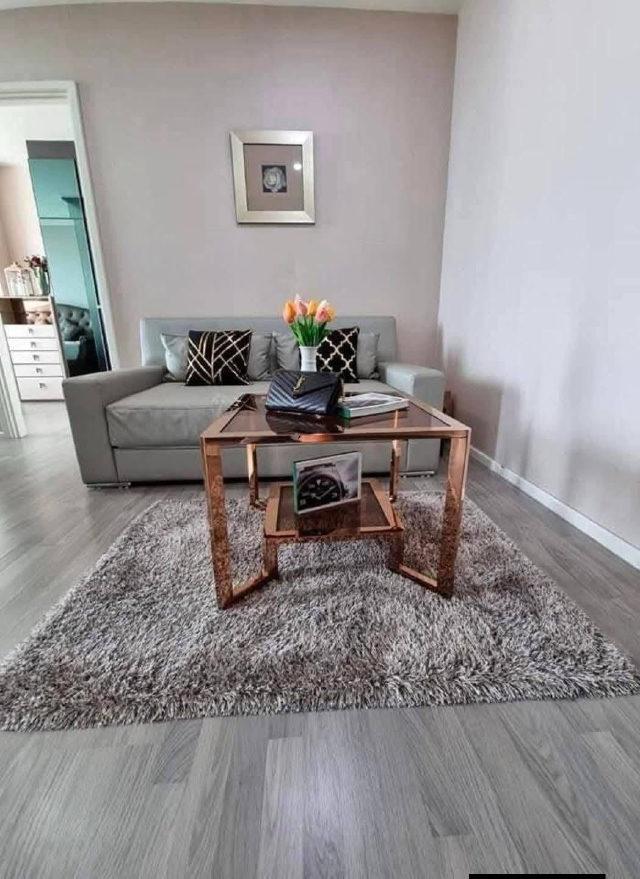
A well-prepared video viewing lets you shortlist a home in Bangkok from abroad. Send your criteria beforehand, have everything the photos don't show filmed without cuts (noise, light, air conditioning, the walk to the station) and ask your questions live. Never pay anything without a written agreement and a receipt.
Looking for a home in Bangkok from Paris, London or Brussels has become common. Many of our clients arrive in Thailand with a lease already signed, or with two or three shortlisted flats to view in their first week. The key is a well-prepared video viewing: it doesn't replace everything, but it rules out bad surprises and saves precious time. Here is how we organise it.
1.Can you really choose a home without seeing it?
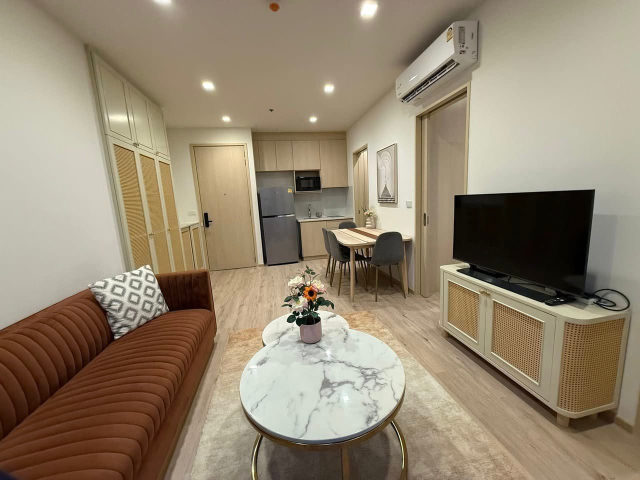
Yes, as long as you don't rely on photos alone. Listing photos are often wide-angle shots, taken on a sunny day in a tidy flat. They tell you nothing about street noise, the state of the shower seals, the smell of the corridor or the real walking time to the station.
A live video viewing fills most of these gaps. You see the flat as it is, right now, and you can ask to see what matters to you. What it doesn't replace: the sense of space, smells and sometimes the feel of the neighbourhood. That is why we often suggest a two-step approach: a remote shortlist, then, if your schedule allows, one last viewing in person before signing.
2.How do you prepare a video viewing?
A good viewing starts before the call. Send your contact:
- your essential criteria: maximum budget, number of bedrooms, neighbourhood or station, arrival date;
- your non-negotiables: pets, bathtub, separate office, high floor, quiet;
- the journeys you will make every day: office, school, gym;
- your availability, bearing the time difference in mind (five or six hours with France depending on the season).
On your side, prepare your list of questions and a way to take notes or record the call, with your contact's agreement. A stable connection and a screen larger than a phone help you judge better.
3.Which tools should you use for the viewing?
A simple video-call app is enough: WhatsApp, FaceTime, Zoom or Google Meet. Choose whichever works best for you, and have a backup in case the connection drops in lifts or car parks. After the call, also ask for a few photos and a short video of the flat: you can look at them again calmly and compare them.
If several people need to give their opinion (partner, children, employer), invite them directly to the call. A decision made together, live, avoids back-and-forth.
4.What should be filmed during the viewing?
Ask for a continuous, unedited video and take your time. Here is the list we follow.
Inside the flat
- The view from every window, and what is opposite (another tower, a building site, an expressway).
- The noise: windows open, then closed, a few seconds of silence.
- The air conditioning, switched on in every room, and how old the units look.
- The bathroom: water pressure, hot water, state of the seals, ventilation.
- The kitchen: hob, fridge, extractor, storage, whether there is an oven.
- Open cupboards, sockets, the washing machine.
- Small defects: ceiling stains (signs of leaks), walls, floors.
In the building
- The lobby and reception: security, key cards, guards.
- The pool, gym and common areas, and their opening hours.
- The lifts: how many, and the waiting time at rush hour.
- Parking or bike storage, if you need it.
Around it
- The walk to the station, for real, from the building's door to the platform if possible.
- The street: pavements, shops, markets, traffic noise.
5.Which questions should you ask during the call?
Use the viewing to clarify everything that isn't in the listing:
- What is the exact rent, and what does it include (building fees, internet, cleaning)?
- What security deposit and advance rent are required?
- What lease length, and from what date is the property available?
- How are electricity and water billed?
- Is the furniture you see staying? Can items be added or removed?
- Are pets accepted by the building and by the owner?
- Is any building work planned in the building or nearby?
Write the answers down and ask for them to be confirmed by message or email.
6.When to view: what time of day and what time of year?
The time of the viewing matters. Late in the day, you see the evening light, the lighting in the common areas and the life of the street. In the middle of the day, you can better judge the heat and sun exposure. If you really like a property, a second viewing at another time of day is a good habit.
During the rainy season, roughly from May to October, ask whether the street or the car park floods during heavy downpours: some parts of Bangkok are more prone to it than others.
7.How do you reserve a home remotely and safely?
Once you have found the right flat, the reservation is often made remotely. A few simple rules protect your money:
- pay nothing without a written document: an offer or reservation agreement stating the property, the rent, the dates and the refund conditions;
- check who you are paying: an identified owner or a known agency, with a receipt for every payment;
- be wary of prices that are too low and of pressing payment requests without a viewing or a contract;
- keep a record of all exchanges, photos and videos.
The final lease is then signed, depending on the case, remotely or when you arrive. Deposit and signing terms depend on the owner.
8.Which warning signs should you watch for?
Some signs should make you slow down, or walk away:
- the person refuses a live video viewing, or only shows some rooms;
- the exact address or the name of the building remains vague;
- you are pressed to pay to "hold" the property before any written document;
- the bank account to be paid belongs neither to the owner nor to an identified agency;
- the rent is far below that of comparable units in the same building.
If in doubt, ask to see the lobby and the building's name on screen, and compare with other listings in the same building.
9.What should you do on arrival day?
Even after an excellent video viewing, move-in day remains decisive. Compare the flat with what you saw, test every appliance, photograph every room and every defect, read the meters and sign the inventory. If something doesn't match, report it immediately, in writing.
10.What we do for you
For our clients, we organise video viewings in French or English, go on site to film what you want to see, ask the owner your questions and help you compare. When you arrive, we can be there for the inventory. You can write to us at any time to tell us about your plans: share your arrival date, your budget and the areas you are interested in, and we will suggest a first selection to view by video.
Frequently asked questions
How long does a video viewing take?
Allow twenty to thirty minutes per property for a complete viewing, including the walk to the station.
Can I sign the lease without being in Thailand?
It is sometimes possible, depending on the owner: electronic signature or scanned documents. In any case, pay nothing without a written document and a receipt.
What if the flat doesn't match the video when I arrive?
Report it immediately in writing, with photos, before signing the inventory. That is why we recommend attaching the list of items seen on video to the lease.
Is the video viewing charged?
Write to us to find out our terms: they depend on your project.
General information updated on 10 October 2026; check your contract and with the Find Easy team.